
Home › Treatments › Laser & Energy Skin Treatments › Laser Resurfacing › CO2 Laser
CO2 Laser in Gangnam, Seoul
Quick answer: CO2 laser is an ablative laser that vaporizes skin with precise control. At Violacell in Gangnam it is used to remove moles and small skin lesions and, in fractional mode, to resurface acne scars, deep lines and rough texture. Lesion removal usually leaves a small scab for one to two weeks; fractional resurfacing typically means 5–10 days of crusting and redness.
Medically reviewed by Dr. Kim Young-jun, Board-Certified Plastic Surgeon, Representative Director, Violacell Plastic Surgery · Last reviewed November 2026
CO2 laser at a glance
- Treatment type: Ablative carbon dioxide laser (10,600 nm), focused or fractional
- Typical session time: 30–60 minutes, plus numbing time
- Comfort: Strong topical anesthetic; nerve blocks or sedation for deeper settings
- Downtime: About 5–10 days of crusting; redness may last 2–8 weeks
- Results appear: Fresher skin in 2 weeks; collagen builds for 3–6 months
- Sessions: Often 1–3, spaced 2–3 months apart
- Also used for: Removing moles and small skin lesions; a small scab usually heals in 1–2 weeks
- Performed by: A Violacell doctor; Dr. Choi Sang-seok focuses on laser, skin and body treatments, in a clinic led by board-certified plastic surgeons
What is a CO2 laser?
The carbon dioxide laser has been used in skin resurfacing for decades. Older fully ablative CO2 treatments removed the entire outer skin layer and required long recovery. Fractional CO2 delivers the beam as a grid of tiny columns, leaving bridges of intact skin between them. This keeps much of the power of CO2 while shortening healing time and lowering complication risk.
At Violacell, CO2 laser has two roles. In a focused mode it removes moles and small skin lesions precisely, layer by layer, after your doctor has examined each one; any lesion that looks suspicious should be assessed appropriately before removal. In fractional mode it resurfaces the skin for scars and texture, which most of this page describes.
How does ablative resurfacing work?
The 10,600 nm wavelength is strongly absorbed by water in the skin, so each microbeam vaporizes a narrow channel of tissue and heats the surrounding dermis. The body responds with intense wound healing: damaged surface skin is replaced, and new collagen forms over months, tightening and smoothing the skin. Depth and density are adjusted to the concern and skin type.
What can CO2 laser treat?
- Moles, small benign skin growths and other lesions, removed after examination
- Moderate to deep acne scars, including boxcar scars
- Deeper wrinkles around the eyes and mouth, including lip lines
- Crepey skin and mild laxity
- Significant sun damage and rough texture
- Surgical and traumatic scars, after full healing
Who is a good candidate?
CO2 fractional resurfacing tends to suit adults with lighter to medium skin and significant texture concerns who can accept a real recovery period. Medium to darker skin types can still be treated, but the risk of post-inflammatory hyperpigmentation is higher, so lower densities and careful preparation are essential. It is not appropriate with active infection, recent isotretinoin use without medical review, a history of keloids, or during pregnancy.
What happens during treatment in Gangnam?
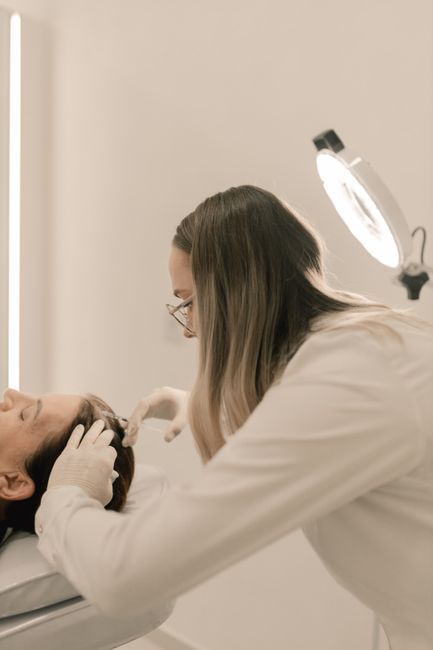
A doctor assesses your scars or lines and discusses expected improvement and downtime frankly. Antiviral medication may be prescribed if you have a history of cold sores. Strong numbing cream is applied, and for deeper treatments local nerve blocks or light sedation may be offered. The laser is passed over each area, and the skin is then covered with an occlusive ointment.
Recovery and aftercare
For the first few days, the skin is red, swollen and may ooze before forming fine brown crusts. Regular gentle cleansing and frequent ointment application help the skin heal. New skin usually forms in about a week, after which it remains pink for several weeks. Sun protection is critical for months. We give written instructions and a follow-up check; see our aftercare instructions.
Risks and side effects
Expected effects are swelling, oozing, crusting, itching and redness. Possible complications include infection (bacterial, viral or fungal), acne flares and milia, prolonged redness, post-inflammatory hyperpigmentation, delayed hypopigmentation and, rarely, scarring. Some of these can be long-lasting. Treating the neck or chest needs especially conservative settings. Choosing an experienced doctor and following aftercare closely reduces risk.
What results can I expect?
Skin typically looks smoother and more even once healing finishes, and improvement continues for three to six months. Many patients see a meaningful softening of acne scars after one or two sessions, though scars rarely disappear completely. Results vary with skin type, scar depth and settings.
CO2 laser vs other options
Virtue RF microneedling offers less downtime for enlarged pores and milder scars but usually needs more sessions. For acne scars with tethering, combining CO2 with subcision or RF microneedling often gives better results. If loose skin is the main issue, lifting treatments may help more than resurfacing.
Planning CO2 laser from abroad
CO2 resurfacing is a longer-stay treatment. Plan to remain in Seoul for at least 7–10 days so your doctor can check healing before you fly. Flying with healing skin is generally possible once crusts have separated, but plan for low-key days without sun exposure. Because results develop over months, schedule any follow-up session for a later trip. See our patient journey and pricing guide.
Not sure which treatment is right?
Send us a few photos and your goals through KakaoTalk or our booking form. A Violacell doctor will review them, and every visit starts with a free AI skin analysis and a 1:1 consultation.
CO2 Laser FAQ
How long is the downtime after CO2 fractional laser?
Most people need about 5–10 days before crusting resolves and they feel comfortable in public with makeup. Pinkness can last two to eight weeks, longer in sensitive skin. Deeper treatments mean longer recovery. After removal of a small mole or lesion, a scab usually heals within one to two weeks.
Is CO2 laser safe for Asian skin?
It can be performed on Asian skin, but post-inflammatory hyperpigmentation is common and can last months. Lower densities, pre-treatment skincare, strict sun avoidance and an experienced doctor help reduce the risk.
How many CO2 laser sessions do I need?
One session can give noticeable improvement for wrinkles or sun damage. Acne scars often need two or three sessions spaced two to three months apart. Most small moles or lesions need a single session.
Does CO2 fractional laser hurt?
It is more uncomfortable than non-ablative lasers. Strong numbing cream, cooling and, for deeper settings, nerve blocks or sedation keep it tolerable. Afterward, the skin feels like a significant sunburn for a day or two.
Plan your visit to Violacell
3F, 138 Dosan-daero, Gangnam, a 4-minute walk from Sinsa Station Exit 1. Free AI skin analysis, a treatment plan designed by our doctors, and private single-room care. Call +82-2-518-9119 or message us on KakaoTalk.
Educational information only, not a substitute for a medical consultation. Suitability, downtime and results vary between individuals. Medical disclaimer