
Home › Treatments › Lifting & Tightening › Ultrasound (HIFU) Lifting › Ulthera Prime (Ultherapy)
Ulthera Prime (Ultherapy) in Gangnam, Seoul
Quick answer: Ulthera Prime is the newer generation of Ultherapy, a non-surgical lifting treatment that uses micro-focused ultrasound with real-time imaging to heat the deep SMAS layer and dermis, stimulating new collagen. It is best for mild to moderate sagging of the brow, jawline, under-chin and neck. There is little or no downtime, and results build gradually over two to three months.
Medically reviewed by Dr. Kim Young-jun, Board-Certified Plastic Surgeon, Representative Director, Violacell Plastic Surgery · Last reviewed November 2026
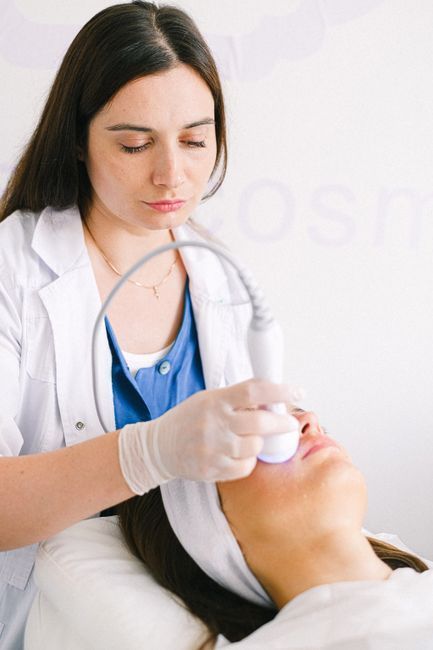
Ulthera Prime at a glance
- Treatment type: Micro-focused ultrasound with visualization (MFU-V)
- Typical session time: 30–90 minutes, depending on areas treated
- Comfort: Topical numbing; some clinics add oral pain relief. Sensation is felt as brief deep heat
- Downtime: Usually none to minimal; temporary redness, swelling or tenderness
- Results appear: Gradually over 2–3 months as collagen remodels
- Typical duration of results: Often around a year; varies with age and skin
- Sessions: Usually one, with maintenance every 12–18 months
- Performed by: Performed personally by a Violacell doctor; the clinic is led by board-certified plastic surgeons
What is Ulthera Prime?
Ulthera, marketed as Ultherapy, is a micro-focused ultrasound device that delivers precise points of heat beneath the skin without cutting or injuring the surface. Its key distinction from many other HIFU devices is built-in ultrasound imaging, which lets the practitioner see the tissue layers on screen and place energy at the intended depth, including the SMAS layer that surgeons tighten during a facelift.
Violacell Plastic Surgery uses Ulthera Prime, the newer platform in the Ultherapy family from Merz Aesthetics. It works on the same principle, micro-focused ultrasound guided by real-time imaging, and Violacell uses it particularly for precise jawline and neck definition. The guidance on this page applies to Ulthera Prime; your doctor will explain the specific settings and line counts planned for you.
How does Ulthera work?
Focused ultrasound energy creates tiny thermal coagulation points at set depths, commonly 1.5 mm, 3.0 mm and 4.5 mm. The heat causes immediate contraction of existing collagen and triggers a wound-healing response that produces new collagen and elastin over the following months. Because the energy bypasses the skin surface, there is no peeling or open wound.
Who is a good candidate?
Ulthera tends to suit adults with mild to moderate skin laxity who want a subtle lift without surgery, typically from their mid-30s to early 60s. Common goals include lifting a lowered brow, refining the jawline, reducing jowls and tightening loose skin under the chin and on the neck. People with significant sagging or heavy excess skin may see more meaningful change from surgery such as a facelift, which Violacell does not perform; your doctor will tell you honestly if that is the case and can advise on referral.
Your Ulthera treatment at Violacell in Gangnam
Your visit begins with a consultation with a Violacell doctor, who assesses skin thickness, laxity and facial anatomy and maps the treatment depths and line counts for each area. Topical anesthetic is applied, the face is cleansed and marked, and the treatment is delivered using the imaging transducer. A full face and neck session usually takes about an hour. You can return to your hotel, sightseeing or work the same day.
Recovery and aftercare
Mild redness usually fades within hours. Some people notice swelling, tingling or tenderness along the jawline for a few days, and small bruises are occasionally seen. Gentle skincare, sun protection and avoiding saunas or intense heat for a few days are generally recommended. See our aftercare instructions for details.
Risks and side effects
Ulthera is generally well tolerated, but no medical procedure is risk-free. Possible side effects include temporary pain, swelling, bruising, welts and, rarely, transient nerve irritation causing numbness or weakness, or fat loss in thin faces if energy is placed too superficially or excessively. Careful depth selection by an experienced practitioner reduces these risks, which is why doctor-led planning matters.
What results can I expect?
Some tightening may be visible immediately, but the main improvement develops as new collagen forms over two to three months. Results are natural and gradual rather than dramatic, and the degree of lift varies between individuals. Results do not stop the aging process, so many patients plan a maintenance session every 12 to 18 months.
Ulthera vs Thermage and other options
Ulthera works deeper and is primarily a lifting treatment, while Thermage FLX uses radiofrequency to tighten and improve skin texture in the dermis. Korean clinics frequently combine the two for lifting and skin quality. Other HIFU options such as Shurink Universe offer a lower-cost, often more comfortable alternative without real-time imaging. Read our comparison: Ulthera vs Thermage: which is better?
Planning Ulthera from abroad
Because downtime is minimal, Ulthera fits easily into a short trip to Seoul. Most patients can fly home the following day. If you are combining Ulthera Prime with injectables or threads, allow extra days in Gangnam. Our patient journey page explains how online consultations, scheduling and remote follow-up work.
How much does Ulthera cost?
Price depends on the areas treated and the number of lines delivered, so we provide a written, itemized quote after your consultation. Ask for the line count and confirm that a genuine Ulthera handpiece is used. See our pricing guide for what is included.
Not sure which treatment is right?
Send us a few photos and your goals through KakaoTalk or our booking form. A Violacell doctor will review them, and every visit starts with a free AI skin analysis and a 1:1 consultation.
Ulthera FAQ
Does Ulthera hurt?
Most people feel brief, deep heat or tingling as each line is delivered, most noticeably over bony areas. Topical numbing and adjusted energy settings keep it tolerable for most patients.
How long does Ulthera last?
Results commonly last around a year, sometimes longer, depending on age, skin quality and lifestyle. Many patients choose a maintenance session every 12 to 18 months.
Can I fly home after Ulthera?
Yes. Because there is no wound and little or no downtime, most patients can fly the next day.
Is Ulthera safe for Asian skin?
Yes. Ultrasound energy bypasses the skin surface and does not target pigment, so it carries a low risk of pigmentation changes in all skin types.
Can Ulthera replace a facelift?
No. Ulthera can delay the need for surgery and improve mild laxity, but it cannot remove excess skin. For moderate to severe sagging, a facelift gives a more significant and longer-lasting result. Violacell does not perform facelifts, but its doctors will tell you honestly if surgery would suit you better.
Plan your visit to Violacell
3F, 138 Dosan-daero, Gangnam, a 4-minute walk from Sinsa Station Exit 1. Free AI skin analysis, a treatment plan designed by our doctors, and private single-room care. Call +82-2-518-9119 or message us on KakaoTalk.
Educational information only, not a substitute for a medical consultation. Suitability, downtime and results vary between individuals. Medical disclaimer