
Home › Conditions › Neck & Jawline › Neck Aging › Neck Wrinkles
Neck Wrinkles Treatment in Gangnam, Seoul
Quick answer: Neck wrinkles are horizontal lines and creases across the front of the neck, sometimes called necklace lines or tech neck. They are caused by genetics, repeated bending, sun damage and collagen loss. Skin boosters, micro-Botox and fine filler placement often soften them with little downtime. Deep lines combined with loose skin may also need lifting.
Medically reviewed by Dr. Kim Young-jun, Board-Certified Plastic Surgeon, Representative Director, Violacell Plastic Surgery · Last reviewed November 2026
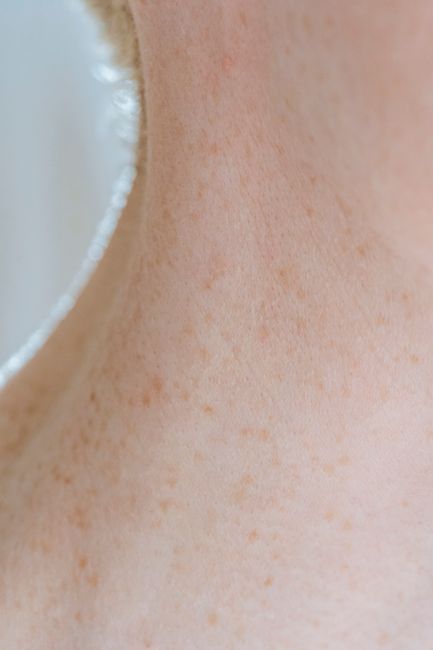
Neck wrinkles at a glance
- Common causes: Genetics, repeated neck flexion, sun exposure, thin skin and collagen loss
- Who it affects: Adults of all ages; horizontal lines can appear as early as the 20s
- Best-matched treatments: Neck line rejuvenation, Violacell skin booster, Rejuran Healer, Skin Botox
- Non-surgical options: Skin boosters, micro-Botox, thin hyaluronic acid filler, Virtue RF microneedling
- Surgical options: Rarely relevant for lines alone; not offered at Violacell
- Typical downtime: Usually one to three days of small bumps, redness or bruising
- Assessed by: A Violacell doctor
What are neck wrinkles?
Neck wrinkles are horizontal lines that run across the front and sides of the neck. They are sometimes called necklace lines, transverse neck lines or, when they appear early from looking down at devices, tech neck. Some people are born with a natural crease, while others develop lines gradually as skin thins and loses elasticity.
Unlike loose, hanging skin, neck wrinkles are mainly a problem of the skin surface and the dermis. That distinction matters, because it means many patients can see improvement without surgery.
What causes horizontal neck lines?
Several factors work together. Genetics influence where natural folds form and how deep they are. Repeated flexion, such as looking down at a phone or laptop for hours, folds the skin in the same place day after day. Ultraviolet exposure breaks down collagen and elastin, and neck skin is often forgotten when applying sunscreen.
Neck skin is also thinner and has fewer oil glands than facial skin, so it dehydrates and creases more easily. Weight fluctuation and hormonal changes, including those around menopause, can further reduce skin firmness.
Who tends to get neck wrinkles?
Neck lines affect men and women of all backgrounds. Many younger patients in their 20s and 30s visit Violacell in Gangnam for early tech neck lines, while patients in their 40s and beyond often notice lines together with crepey texture or laxity. People with fair or sun-damaged skin, and those who have lost significant weight, may see lines sooner.
How are neck wrinkles assessed?
Your consultation is led by a Violacell doctor. We look at the number, depth and length of lines with your head in a neutral position and while looking up and down. We assess skin thickness, hydration, texture and sun damage, and check for loose skin, platysmal bands or fullness under the chin that might also need attention.
We classify lines as fine, moderate or deep etched-in creases. Fine lines often respond to skin quality treatment alone, while deeper creases may need a combination approach. Photos are taken to compare results over time.
Which treatments work for neck wrinkles?
Treatment is matched to the depth of the lines and the quality of the surrounding skin. Common options include:
- Skin boosters: the Violacell skin booster is a custom blend chosen after diagnosis for hydration, texture and elasticity, while Rejuran Healer uses polynucleotides to support skin repair and texture.
- Micro-Botox: Skin Botox places very diluted toxin superficially to soften crepiness and fine creasing.
- Fine filler threading: a soft hyaluronic acid filler placed carefully along deeper etched lines.
- Collagen stimulation: RF microneedling or radiofrequency tightening for texture and mild laxity.
Many patients receive these as part of a structured neck line rejuvenation program over several sessions.
Is surgery ever needed?
Surgery is not usually performed for neck lines alone. If horizontal lines occur alongside significant loose skin, lifting with Ulthera Prime or Thermage FLX may help the overall contour; for advanced laxity a surgical neck lift may suit better, which Violacell does not perform. Your doctor will explain whether this is relevant to you.
Risks, recovery and realistic results
Injections in the neck may cause small bumps, redness, swelling or bruising that typically settle within a few days. Filler placed too superficially in thin neck skin can create visible ridges or a bluish tint, which is why careful technique matters. Botox in the neck must be dosed conservatively to avoid affecting swallowing or neck strength.
Most patients see gradual softening of lines over several weeks rather than complete erasure. Deep, long-standing creases rarely disappear entirely. Maintenance and daily sun protection help preserve results.
Planning neck wrinkle treatment in Seoul
Because downtime is minimal, a first session fits easily into a short trip to Seoul, and follow-up sessions can sometimes be scheduled on a later visit. See our pricing guide for how quotes work, and our anti-aging by age guide for preventive steps in each decade.
Which treatment fits this concern?
Every visit to Violacell starts with a free AI skin analysis. A Violacell doctor then designs a non-surgical plan for your face, with honest expectations.
Neck wrinkles FAQ
Can neck lines be removed completely?
Fine lines can often be softened considerably, but deep, long-standing creases rarely disappear completely. Most patients aim for a visible improvement that makes the neck look smoother and better hydrated. Combining skin boosters with careful filler or micro-Botox usually gives the most natural result.
How many sessions do I need for neck wrinkles?
Many skin booster protocols use two to three sessions spaced a few weeks apart, followed by maintenance. Filler for etched lines may need only one session with a review. Your doctor will suggest a schedule that also fits your travel plans to Seoul.
Is tech neck permanent?
Tech neck lines can become etched over time, but early lines often respond well to treatment and lifestyle changes. Raising screens to eye level, applying sunscreen and moisturizer to the neck daily, and starting skin quality treatments early can help slow progression.
Is filler safe for neck lines?
Filler can be used for neck lines when a soft product is placed with careful technique in small amounts. Neck skin is thin, so overly superficial or excessive filler can look lumpy. An experienced injector and a conservative approach reduce this risk, and hyaluronic acid filler can be dissolved if needed.
Can men get neck wrinkle treatment?
Yes. Men often have thicker skin but can still develop deep horizontal lines. Treatment principles are similar, although doses and product choices may differ. Our doctors tailor each plan to the patient, regardless of gender, and discreet, natural results are usually the priority for male patients.
Plan your visit to Violacell
3F, 138 Dosan-daero, Gangnam, a 4-minute walk from Sinsa Station Exit 1. Free AI skin analysis, a treatment plan designed by our doctors, and private single-room care. Call +82-2-518-9119 or message us on KakaoTalk.
Educational information only, not a substitute for a medical consultation. Suitability, downtime and results vary between individuals. Medical disclaimer